


Choosing the right material for an outdoor shower is essential for durability, appearance, and easy maintenance. Outdoor fixtures must handle moisture, sunlight, temperature changes, and regular use.
Stainless steel, brass, copper, natural stone, teak, and porcelain are all popular options. The best choice depends on your climate, installation location, and backyard design.
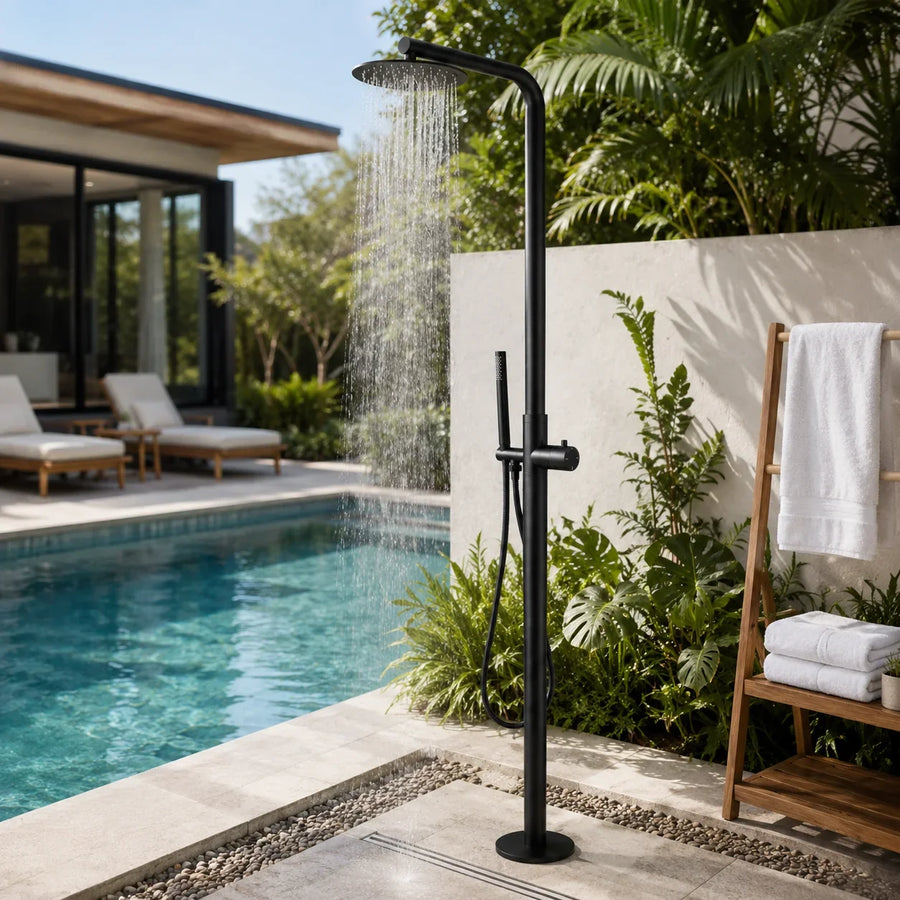
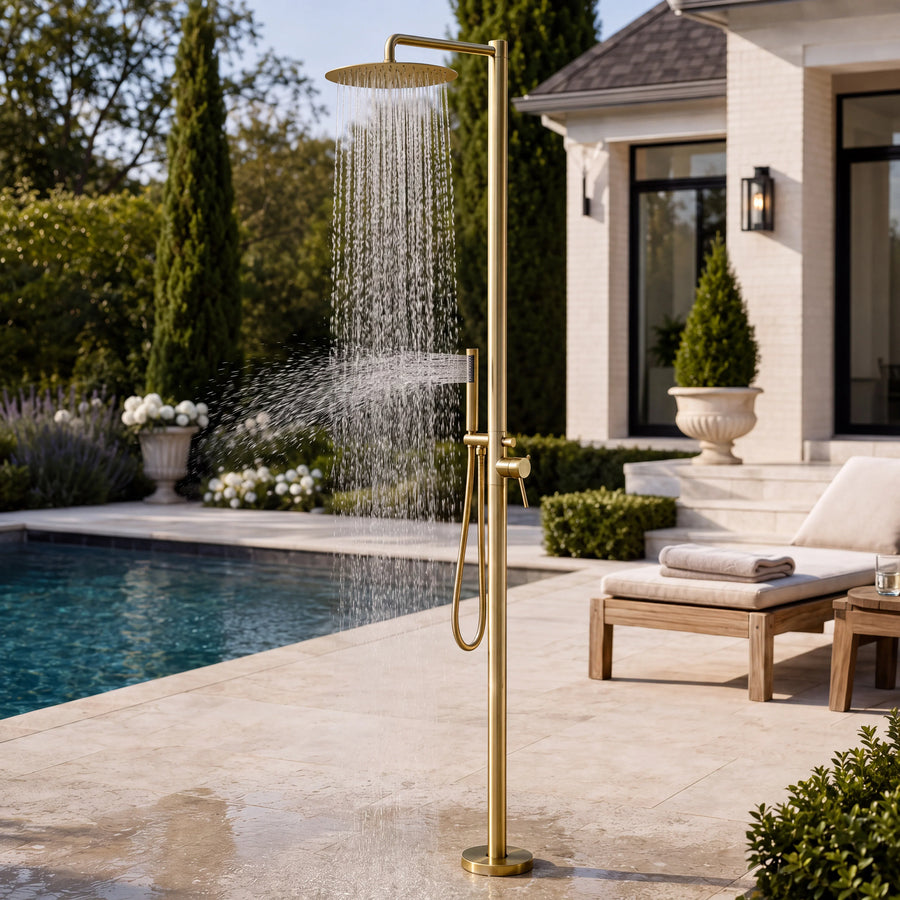
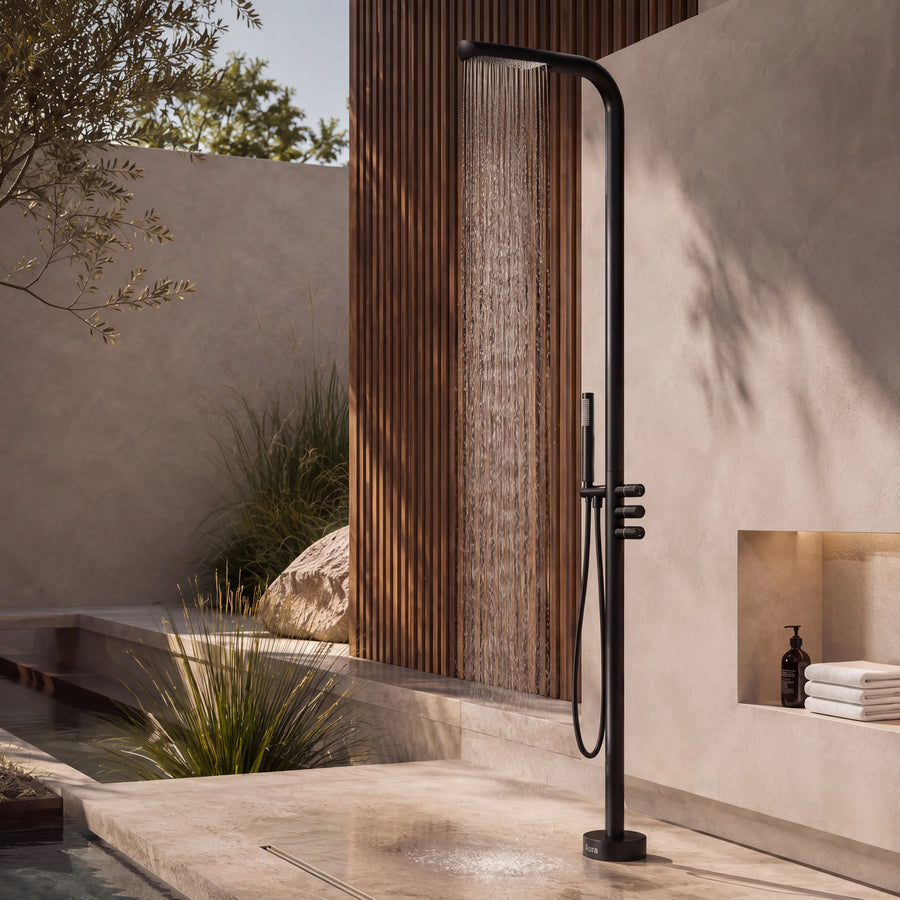
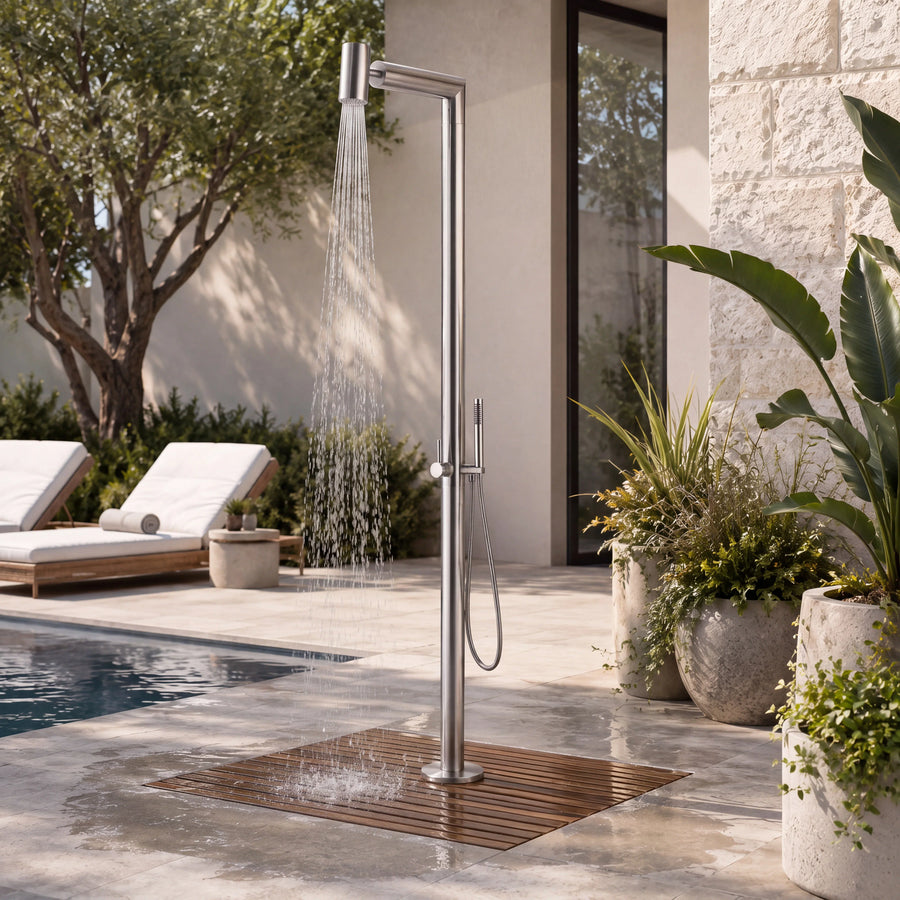
Understand the Best Materials for Outdoor Shower Fixtures
The shower column and fittings are constantly exposed to water and outdoor conditions. Choosing corrosion-resistant materials can help maintain their appearance and performance.
Stainless Steel: A Reliable All-Around Choice
Stainless steel is widely used for outdoor shower fixtures because of its durability, clean appearance, and corrosion resistance.
Two common grades are 304 and 316 stainless steel.
-
304 Stainless Steel: Offers good corrosion resistance for many residential outdoor applications. It is a practical choice for patios, gardens, and sheltered poolside areas.
-
316 Stainless Steel: Contains molybdenum, which improves resistance to chloride exposure. It is particularly useful for coastal properties and environments exposed to saltwater.
For most residential installations, 304 stainless steel is a practical option. If your home is close to the ocean, 316 stainless steel is worth considering.
Neither grade is completely corrosion-proof. Regular cleaning and proper installation remain important.
Brass: Warm and Decorative
Brass is popular for outdoor shower fixtures because of its warm golden appearance.
It works well with farmhouse, traditional, and modern backyard designs. Brushed brass and brushed gold finishes can create an elegant look around pools and patios.
Check whether the fixture is made from solid brass or simply has a brass-colored finish. Their construction and durability can differ.
Copper: Natural Character
Copper offers a distinctive appearance that changes over time. Exposure to air and moisture gradually creates a natural patina, which can become brown, dark, or green.
It is particularly suitable for rustic gardens and traditional outdoor spaces.
However, if you prefer a consistent polished appearance, copper may require more attention to maintain its original look.
Aluminum and Powder-Coated Metal
Aluminum is lightweight and naturally forms a protective oxide layer. It is often used in outdoor structures and decorative fixtures.
Powder-coated metal provides additional finish options, including black, white, and other colors.
However, damaged coatings can expose the underlying metal to moisture. Check the manufacturer's outdoor-use recommendations before purchasing.
Outdoor Shower Fixture Comparison
|
Material |
Main Advantage |
Best Application |
|---|---|---|
|
304 Stainless Steel |
Durability and corrosion resistance |
Residential outdoor showers |
|
316 Stainless Steel |
Better chloride resistance |
Coastal environments |
|
Brass |
Warm decorative appearance |
Traditional and modern designs |
|
Copper |
Natural aging and character |
Rustic outdoor spaces |
|
Aluminum |
Lightweight construction |
Outdoor structures |
|
Powder-Coated Metal |
Flexible color options |
Contemporary designs |

Choose the Right Material for Outdoor Shower Flooring
The floor is just as important as the shower fixture. It needs to handle regular water exposure while providing a stable, comfortable surface.
Porcelain Tile
Porcelain tile is a versatile option for outdoor shower floors and walls. It comes in many colors, patterns, and textures.
When choosing porcelain, consider:
-
Slip Resistance: Choose textured surfaces designed for wet areas.
-
Weather Resistance: Make sure the tile is suitable for outdoor installation and local temperatures.
-
Maintenance: Select a surface that is easy to clean.
In colder climates, frost resistance is particularly important.
Natural Stone
Natural stone creates a natural connection between an outdoor shower and its surroundings.
Popular options include granite, slate, limestone, and travertine.
|
Material |
Appearance |
Consideration |
|---|---|---|
|
Granite |
Natural patterns |
Choose a suitable surface texture |
|
Slate |
Rich colors and texture |
Requires proper installation |
|
Travertine |
Warm natural tones |
Often needs sealing |
|
Limestone |
Soft, understated look |
Porosity requires attention |
Not all natural stone is waterproof. Some varieties absorb moisture and need suitable sealing.
Avoid polished stone flooring where wet conditions could create slipping risks.
Teak Wood
Teak is popular for outdoor shower platforms and shower mats because of its natural oils and outdoor durability.
Its golden-brown color adds warmth, while its natural grain complements stainless steel and stone.
Teak can gradually develop a silver-gray appearance when exposed to sunlight and rain. Maintaining its original color may require periodic cleaning and protective treatment.
Good drainage and ventilation are also important to prevent water from remaining trapped underneath.
Concrete and Composite Decking
Concrete is a practical option for modern outdoor showers. It can be finished with different textures and colors, making it suitable for contemporary patios and minimalist gardens.
Composite decking is another option for homeowners who want a wood-like appearance with less routine surface treatment.
For both materials, check drainage, slip resistance, and suitability for wet outdoor conditions.
How Climate Affects Outdoor Shower Materials
Your local environment plays an important role in material selection.
Coastal and Poolside Areas
Salt exposure can increase corrosion risks, particularly for metal fixtures with lower resistance to chlorides.
For coastal homes, 316 stainless steel is generally worth considering. For poolside installations, also consider exposure to pool chemicals and cleaning products.
Regularly rinse metal surfaces with fresh water and remove salt or chemical deposits.
Hot and Sunny Climates
Direct sunlight can affect coatings, wood finishes, and flooring temperatures.
Choose materials specifically rated for outdoor use. Stone, stainless steel, and suitable porcelain are common options.
Dark flooring can become hot under direct sunlight, so consider lighter finishes or partial shade for better comfort.

Cold Climates
Freezing temperatures can damage outdoor plumbing when water remains inside exposed pipes.
Choose a shower system that can be drained and winterized according to the manufacturer's instructions.
Also check that the flooring is suitable for local freeze-thaw conditions.
Plan Proper Drainage
Good drainage prevents water from collecting around the shower and affecting nearby surfaces or landscaping.
The drainage arrangement should comply with local plumbing requirements. Rules can differ depending on whether the shower uses cold water only, includes hot water, or connects to a drainage system.
Check local requirements before installation rather than assuming wastewater can always drain directly into the garden.

How to Choose the Right Outdoor Shower for Your Home
Beyond the main material, consider how the shower will look, function, and perform over time.
Match the Material to Your Backyard Style
Different combinations create different outdoor atmospheres.
-
Modern: Brushed stainless steel, concrete, and neutral porcelain create a clean appearance.
-
Farmhouse: Brass finishes, natural stone, and teak add warmth.
-
Tropical: Natural wood, stone, and warm metal finishes create a relaxed atmosphere.
-
Minimalist: Simple stainless steel fixtures and neutral flooring keep the design uncluttered.
You do not need to use the same material everywhere. Combining two or three complementary finishes can create a more balanced design.
Consider Maintenance and Quality
Different materials require different levels of care.
Stainless steel benefits from regular cleaning with mild products and fresh water rinsing, especially near the coast. Avoid harsh cleaners such as hydrochloric acid, which can damage stainless steel.
Natural stone may need sealing, while teak can gradually change color. Powder-coated metal should be checked for scratches and damaged areas.
Before purchasing, review these details:
|
Buying Factor |
What to Check |
|---|---|
|
Main Material |
Stainless steel grade or metal type |
|
Finish |
Suitable for outdoor exposure |
|
Shower Head |
Rainfall or adjustable spray |
|
Hand Shower |
Flexible rinsing and cleaning |
|
Water Flow |
Flow rate and restrictor |
|
Installation |
Floor mounting and plumbing |
|
Warranty |
Coverage and environmental limitations |

Explore Stainless Steel Outdoor Showers from Perimost
For homeowners who prefer modern outdoor fixtures, Perimost offers freestanding stainless steel showers designed for patios, gardens, and poolside spaces.
Lena Outdoor Shower - Brushed Gold
The Lena features 304 stainless steel construction with an elegant brushed gold finish. It combines a rainfall shower head with a hand shower and includes a 1.6 GPM flow restrictor. Its freestanding design suits modern patios, gardens, and poolside areas.
Sienna Outdoor Shower - Brushed Silver
The Sienna combines 304 stainless steel construction with a brushed silver finish for a clean, contemporary look. It includes a rainfall shower head, hand shower, shower hose, and mounting hardware, making it a practical option for modern outdoor spaces.
Final Thoughts
The best outdoor shower material depends on your climate, location, design preferences, and maintenance needs.
Stainless steel is a practical choice for shower fixtures, while porcelain, natural stone, and teak offer attractive flooring options.
Focus on material quality, drainage, and weather resistance to create an outdoor shower that remains functional and attractive over time.


