


An outdoor shower is a practical addition to an American home, especially if you have a swimming pool, a backyard or live near the beach. It provides a convenient place to rinse off sand, chlorine and dirt without bringing everything inside.
However, building an outdoor shower involves more than buying a shower fixture. Plumbing, drainage, flooring, privacy screens and installation labor all affect the total cost.
For a typical permanent outdoor shower with hot and cold water, homeowners can generally budget around $1,000 to $4,000. The final price depends on the location, materials and complexity of the installation.
How Much Does It Cost to Build an Outdoor Shower?
A standard outdoor shower usually includes a shower fixture, water connections, drainage and a suitable floor surface. Some homeowners also add a privacy screen or enclosure.
For general U.S. budgeting, consider the following estimated costs:
|
Project Component |
Estimated Cost |
|---|---|
|
Outdoor Shower Fixture |
$200-$900 |
|
Plumbing Materials |
$150-$600 |
|
Plumbing Labor |
$300-$1,200 |
|
Drainage Preparation |
$150-$700 |
|
Flooring |
$100-$500 |
|
Privacy Screen |
$200-$1,000 |
These are broad planning estimates, not fixed national prices. Actual costs vary by location, labor rates and site conditions. Some items may also be included in a contractor's overall quote.
The total project may cost more if you need extensive trenching, a new hot water connection or custom construction.

What Factors Affect Outdoor Shower Installation Costs?
Water Supply and Plumbing
Plumbing is one of the biggest factors affecting installation costs.
If the shower is located near an existing bathroom or outdoor water connection, installation may be relatively straightforward. A shower at the far end of a backyard may require longer pipes, trenching and additional labor.
You also need to decide whether you want cold water only or both hot and cold water.
Hot water generally requires extending a line from your home's water heater or installing a suitable point-of-use water heater. A mixing valve is also needed to control the water temperature.
Drainage and Ground Preparation
Outdoor shower drainage needs careful planning. Water should not be allowed to collect around the shower or damage the home's foundation.
Common drainage options include gravel drainage areas, dry wells and approved sewer connections. The suitable option depends on soil conditions, ground slope and local regulations.
Do not assume shower water can simply drain onto the lawn. Soap and shampoo wastewater may be subject to local graywater and plumbing requirements.
Privacy Walls and Flooring
Privacy is important, particularly when an outdoor shower is located near a pool, patio or neighboring property.
Common enclosure materials include:
|
Material |
Main Advantage |
|---|---|
|
Cedar |
Natural and attractive appearance |
|
Composite Panels |
Modern and relatively low maintenance |
|
Natural Stone |
Premium appearance |
|
Concrete |
Durable and versatile |
|
Privacy Screens |
Simple installation |
For flooring, textured concrete, stone pavers and outdoor-rated tiles are popular options. Choose a slip-resistant surface that allows water to drain properly.

Cold Water vs Hot Water Outdoor Showers
The water system you choose affects both installation costs and everyday comfort.
Cold-water showers are suitable for quick rinsing after swimming, gardening or spending time outdoors. They are generally simpler to install because they do not require a hot water supply.
Hot and cold water systems provide greater flexibility, particularly if you plan to use the shower during spring and fall.
|
Feature |
Cold Water |
Hot and Cold Water |
|---|---|---|
|
Installation |
Simpler |
More complex |
|
Plumbing |
Cold supply |
Two water supplies |
|
Temperature Control |
Limited |
Adjustable |
|
Best Use |
Summer rinsing |
Regular outdoor use |
|
Initial Cost |
Lower |
Higher |
For frequent use, a hot and cold water system may be worth the additional investment.

Where Should You Install an Outdoor Shower?
The location can have a significant effect on installation costs and convenience.
Near the Swimming Pool
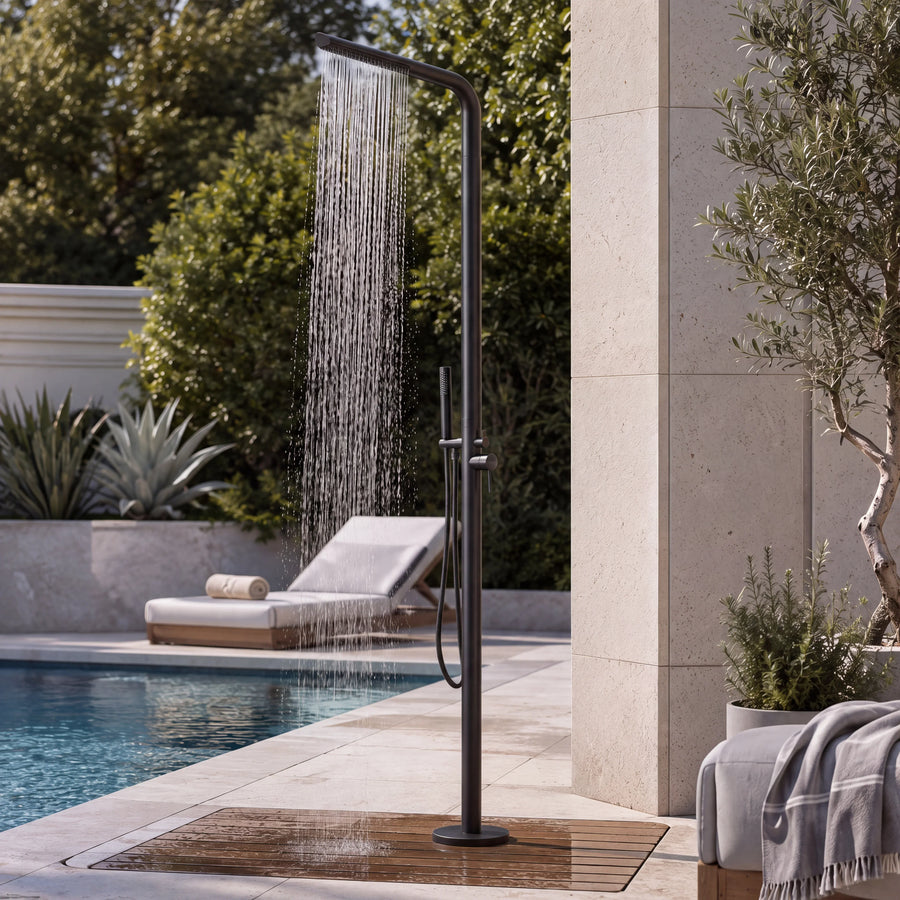
A poolside shower makes it easy to rinse off chlorine, sunscreen and pool water before entering the house. It is also convenient for families and guests.
Against an Exterior Wall
Installing the shower near an exterior wall can reduce the distance between the fixture and existing plumbing. However, proper waterproofing and drainage are essential to protect the wall and foundation.
In a Private Backyard Corner
A secluded location offers more privacy and can create a relaxing outdoor space. You can add plants, wooden screens and natural stone for a more attractive appearance. However, longer plumbing connections may increase installation costs.
Do You Need a Permit to Build an Outdoor Shower?
Permit requirements vary across the United States. A temporary hose-connected shower may be treated differently from a permanent installation with new plumbing, drainage and an enclosure.
Depending on your location, you may need plumbing permits, building approval or inspections.
HOA rules may also apply if you live in a managed community.
Before construction, contact your local building department and check the requirements for water supply and wastewater disposal. Do not assume that outdoor shower water can be discharged directly into the yard.
How to Save Money When Building an Outdoor Shower
A practical outdoor shower does not require an expensive backyard renovation. Careful planning can help control the budget.
-
Choose a location near existing plumbing: Shorter pipe runs can reduce material and labor costs.
-
Keep the enclosure simple: Existing fences or suitable privacy screens may eliminate the need for custom walls.
-
Choose durable materials: Outdoor-rated fixtures and flooring can reduce future repair and replacement costs.
You can also handle some landscaping and decorative work yourself. However, water supply connections and regulated plumbing work should be completed by qualified professionals.
If you live in an area with freezing winters, include pipe protection and winterization in your plans. Exposed pipes need suitable protection to reduce the risk of freezing and damage.

How to Maintain an Outdoor Shower
Outdoor showers are exposed to sunlight, rain, dust and changing temperatures. Regular maintenance helps keep the fixture and surrounding area in good condition.
Stainless steel fixtures should be rinsed with fresh water after exposure to saltwater or pool chemicals. Use mild soap and a soft cloth for routine cleaning.
Also check water connections for leaks, clear drainage areas and inspect exposed pipes before winter.
If your shower has wooden privacy screens, follow the recommended sealing and maintenance instructions for the material.
Outdoor Shower Options from Perimost
Perimost offers outdoor shower fixtures designed for poolside areas, patios and modern backyards. Material quality, finish and showerhead design are important when choosing a fixture.
Avery Outdoor Shower - Brushed Silver
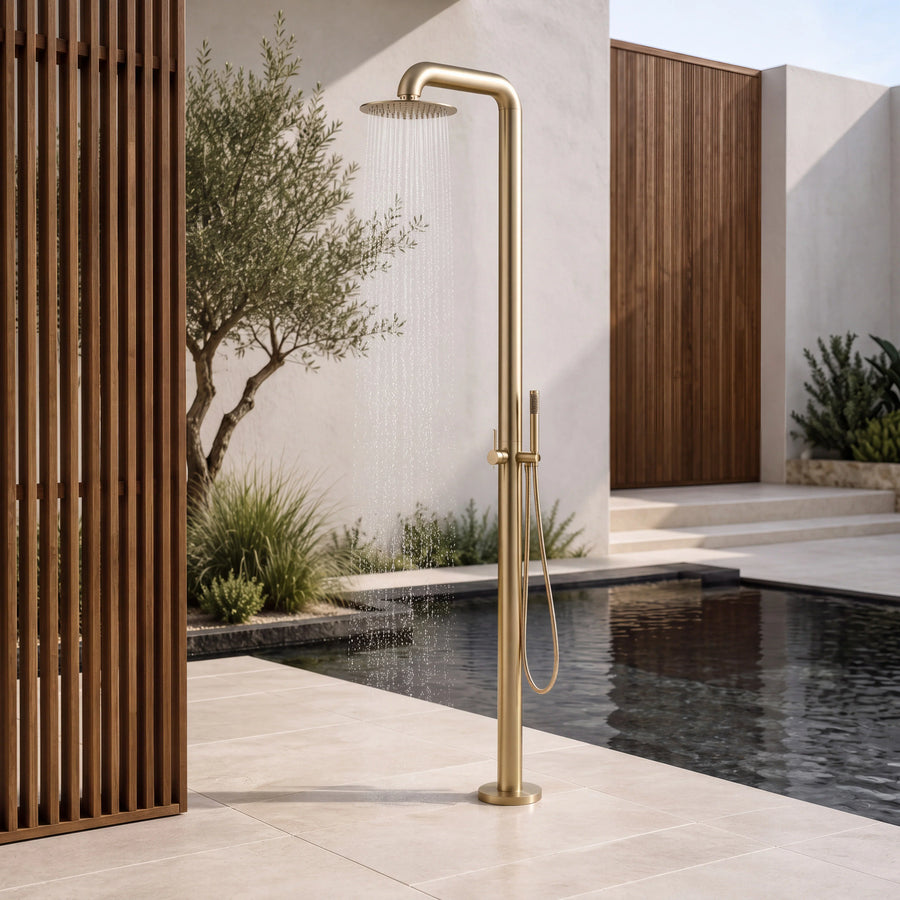
The Perimost Avery features 304 stainless steel construction with a brushed silver finish. It includes an overhead rainfall showerhead and a handheld shower, offering flexibility for poolside rinsing and everyday outdoor use. Its freestanding design and 1.6 GPM flow restrictor make it a practical choice for contemporary outdoor spaces.

Elias Outdoor Shower - Matte Black
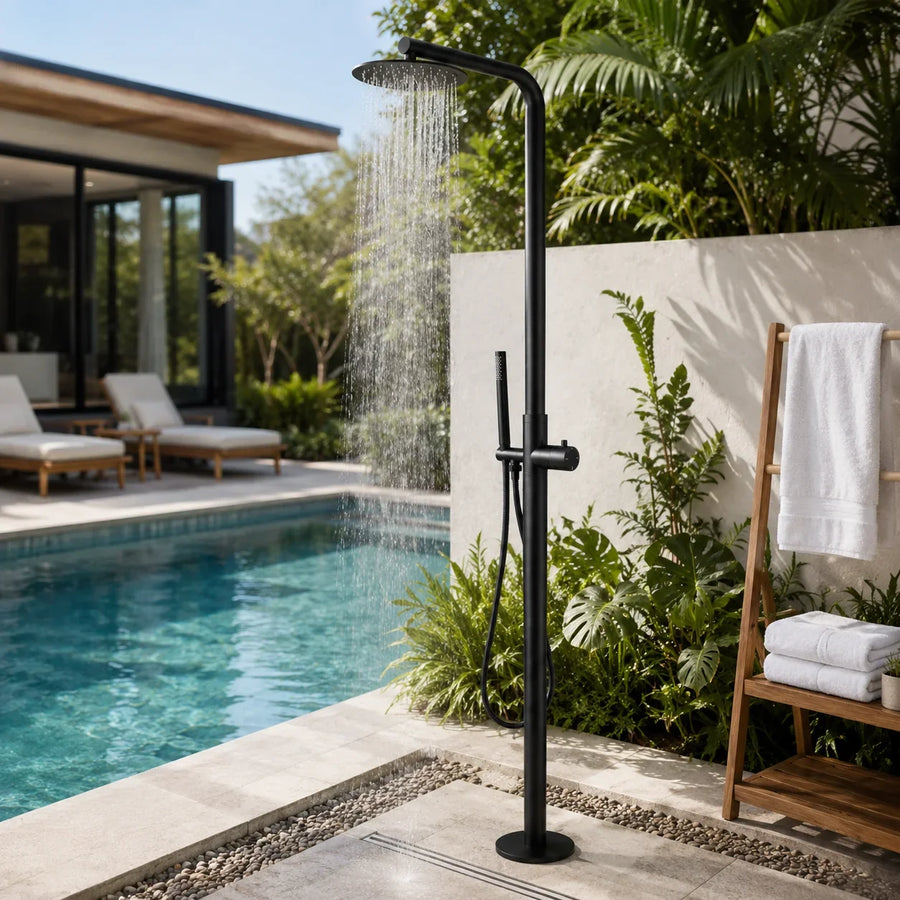
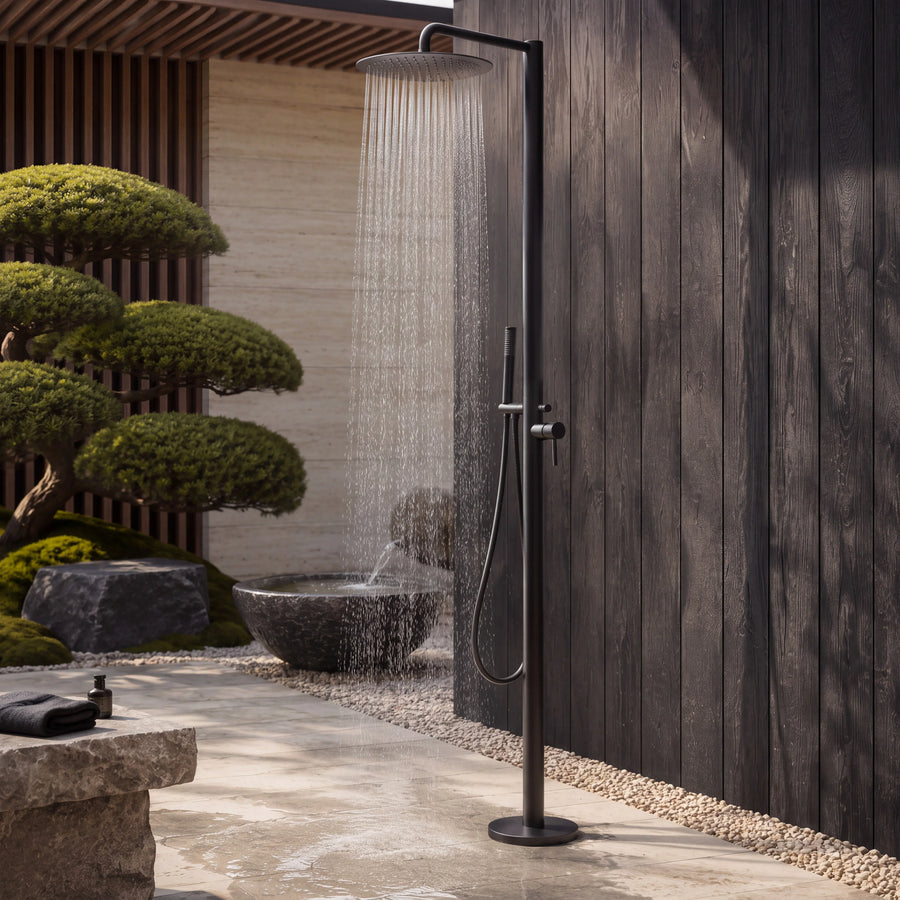
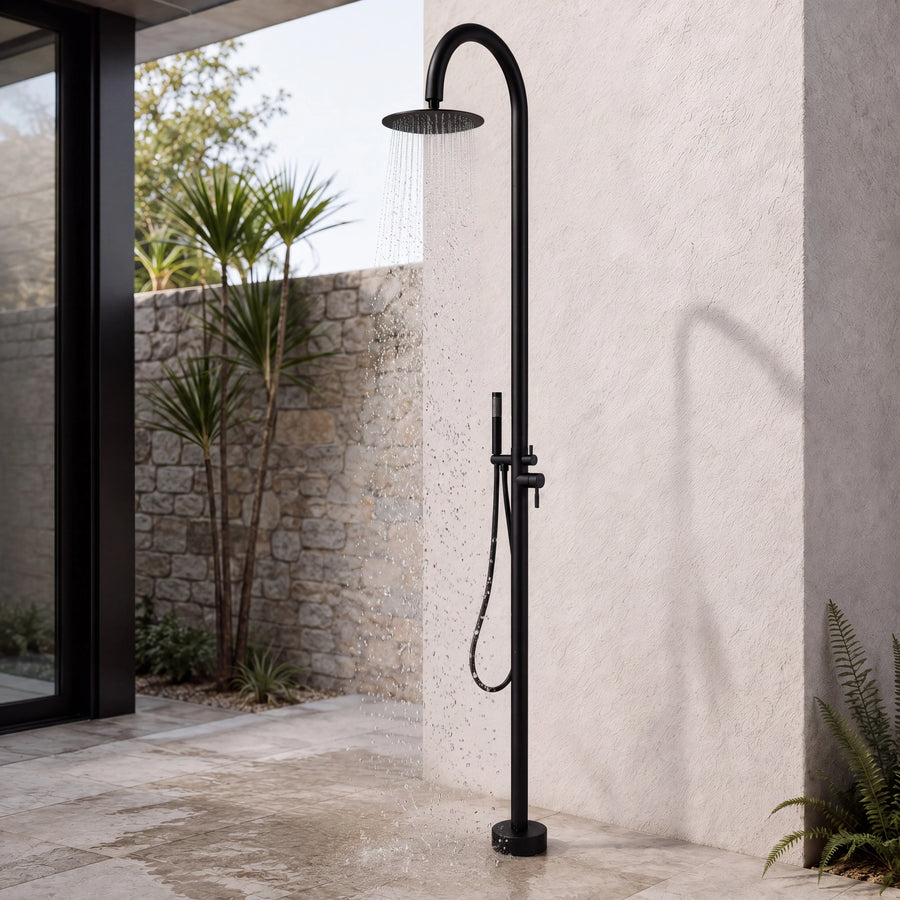
The Perimost Elias combines 304 stainless steel construction with a modern matte black finish. It features a rainfall showerhead, handheld shower and 1.6 GPM flow restrictor. Its freestanding design suits modern backyards, patios and pool areas.

Final Thoughts
Building an outdoor shower typically costs around $1,000 to $4,000 for a permanent installation, depending on plumbing, drainage, materials and labor.
Plan the location and water connections carefully, choose suitable outdoor materials and check local requirements before construction. A well-designed outdoor shower can make your backyard more convenient and enjoyable.


